What Should I Do With an Inherited Toy Collection?
There are many ways to inherit a toy collection. Sometimes a loved one passes away and leaves behind their collection in your hands. Other times, family members downsize or move and the collection gets passed down rather than sold. Collections are very personal to the collector as they represent their personality, the things they love, and the hard work they put into growing it and keeping it for years.
The difficult decisions come when you inherit it and you wonder what you should do with it. The truth is, almost everyone collects something they find interesting, cool, or beautiful even if they don’t realize it. Each collection of things shows off the collector’s personality and values.
Receiving an inherited collection for some is joyous and incredible. For others, it’s burdensome and selling it is necessary. Throughout this process, whichever option you choose, there are other things to consider and do along the way. What should you do with an inherited toy collection? Follow along in our blog with us to find out.
What You'll See More of Throughout This Blog:
There are many things to consider when deciding what to do with an inherited toy collection. It's important to make an inventory, research, authenticate and document, ask professionals, look up sold listings, consider the tax implications, and decide to keep it or sell it. Though there are many things to do and to consider, we hope you follow along throughout the entirety of our blog and find it helpful in moving forward with your inherited toy collection.
Make an Inventory
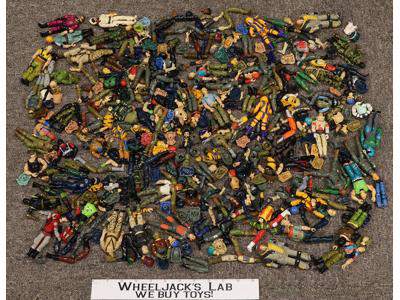
First up, when you receive an inherited toy collection, you’ll want to make an inventory of everything included before moving forward. Serious and long term toy collectors may already have an inventory list with their collection. Having this will save you some time and money and will be beneficial. However, making your own inventory list will help you greatly with the rest of the process of dealing with an inherited toy collection.
When making an inventory, gather all items and sort them by category if they aren’t already. With toys, there are many ways to organize them to help when making an inventory.
You can organize by type: action figures, vehicles, playsets, loose parts, mint-in-box and carded items. You can organize by franchise: Star Wars, Teenage Mutant Ninja Turtles, G.I. Joe, He-Man, etc. You can also organize a toy collection by condition or value, placing higher condition items in one spot and lower condition items in another or by placing higher valued items in one spot and lower valued items in another.
When making an inventory list, online tools such as spreadsheets and specialized apps have shown to be very beneficial. While some people appreciate paper copies more, an online one in addition to a paper copy will be helpful if anything happens to the paper copy.
The online inventory list will also be available to update or change at any time. Other aspects of an inventory list include photos (if possible), names of items (if you know what they are at this stage), current condition, and any documentation included. All of these aspects will give you a great start to handling your inherited collection and will give you security while you begin to understand the collection more.
Research the Collection
While an inventory is super helpful, it can be difficult to build if you don’t know what the toys' names are. Research helps with this as well as many of the other aspects while figuring out what to do with an inherited toy collection.
There are many online tools that can assist with finding what items are named in your inherited collection. For instance, our vintage toy name and identification tool will assist greatly. Simply look up the brand or key words you do know and find the item you have in your collection by looking at the pictures and description that matches.
Research in this step of the process helps to get a much better understanding of all of the items in your inherited collection and will further help you as you continue to take steps. Once you find the name of your toy, you can then do further research if desired to find out the manufacturer, date of release, rarity, etc.
Authenticate and Document
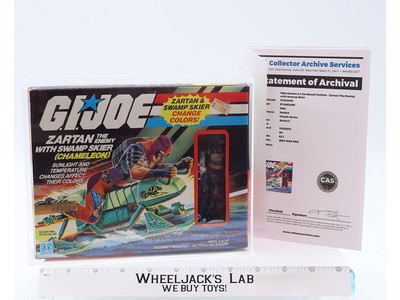
The next step you can take with an inherited toy collection is to get the items authenticated and gather any loose documents that already match up with toys in the collection. While many toys don’t have documents, if your inherited collection includes items that are graded or autographed, a document of authenticity helps to prove that it is real.
Documents, when they are provided, are a great additional bonus as they help the selling process because the buyer can trust they are purchasing the real deal. Documents are also great since they typically raise the value of the toy as a whole.
Authentication is also very important. Authenticating your toys can mean making sure the documentation is correct and matches with the toy. However, it can also simply mean checking your toys to make sure they are the original. Many times, popular toy lines release and make fans go crazy. Smaller toy lines in the same area or in other places of the world sometimes make bootleg or fake toys that resemble the originals closely.
By looking closer at your inherited collection again, you may notice something that you didn’t before. You may see a rare item, unique bootleg, or mystery manufacturer. Whatever the case, looking for authenticity and documentation will aid in this process after you inherit a toy collection.
Ask Professionals and Get an Appraisal
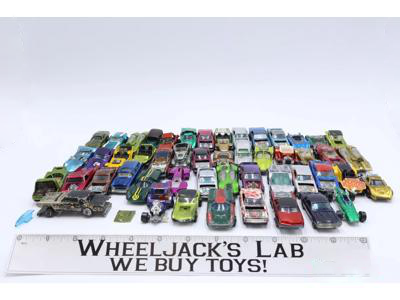
A good next step, or if you ever find yourself at a stand-still throughout this process, is to reach out to a professional for help. Professionals and toy experts have spent years and sometimes decades researching toys themselves, owning toys, selling toys, and helping collectors with their own collections.
Professionals and toy experts can also get you an appraisal on your toy collection. They can view it and give an accurate number for what your collection or individual items are worth.
Most of the time, a retail replacement value is given as it is the highest amount that would be required for replacing an item with another of similar age and condition. This is typically needed for taking out collectors insurance and is helpful for adding updated value to an inventory, getting ready to sell, or simply just knowing what your items are worth.
Look Up Sold Items
If you decide not to get a valuation of your collection, you can also go to a website such as eBay.com and look under the “sold” items when you search any toy. While looking at listings can be beneficial in some ways, looking at items that are sold will help to see what people are actually willing to pay. When people list items, they can often price them too high or too low and it becomes difficult to see what items are actually worth.
Many toys, especially vintage toys, are sold on the market by their perceived value and not their cash value. This means that the toys are worth whatever someone is willing to pay for them. Sometimes multiple collectors search out the same item which drives up the demand. The higher the demand, the higher the value.
Seeing the most recent price for sold items helps to get a better idea for what someone would pay for your items today. It is also helpful to look at the condition when looking at sold items. The condition of an item is crucial when it comes to the value.
If you own an action figure that is loose out of the box and is missing an accessory but look at a sold item of the same figure that is mint-in-box, you won’t get a true value of your item since it isn’t the same condition. When you look at a sold price of the identical item you own that is in the same condition, then you will have a much closer idea of the value of your item.
Consider the Tax Implications
The next thing we will mention is finally deciding whether to sell the collection or to keep it. Before we dive into that, however, we will mention some tax implications to be aware of that come with owning an inherited collection. Many of these tax implications come with selling the collection. With an inherited collection, your cost basis is “stepped-up” to the fair market value of the items from the date you inherit them. Usually, an appraisal is necessary for this with taxes.
If you sell the items at this exact value, then you will owe $0 in capital gains tax, no matter what the original owner paid. However, if you sell the collection for more than your “stepped-up” basis, then any profit is treated as a long-term capital gain.
For collectibles, this is subject to a maximum federal rate of 28% rather than the typical 15% or 20% for stocks. Knowing this about your inherited collection may play a factor into your decision to keep it or to sell it. It will also help with knowing for the future if you hold onto a collection for a while before making a decision.
Decide to Keep It Or Sell It
Now comes the time to decide whether to keep or sell the inherited collection. This decision is difficult because it entails the possibility of getting rid of cherished items that were often owned by a loved one.
When you go to make this decision, consider the sentimental value. Many times, the sentimental value can outweigh the monetary value as the items hold a special place in your heart and help you to remember good memories of your relative or friend who originally owned and grew the collection.
Another thing to consider when you go to decide if you want to sell it or not is the monetary value. Your inherited collection may be worth a lot of money and selling it would provide some financial relief as well as free space in an area of your home.
Another option with selling or keeping an inherited toy collection is simply realizing that not everything needs to be sold, a partial collection can still sell for high amounts of money. With this, you can keep the specific items you love and sell the ones you don’t.
Many people feel guilty about selling inherited items as they don’t want to dishonor their loved ones. However, keeping a collection out of obligation can also be a burden if you don’t actually want it. Does the collection truly bring you joy? Would your loved one rather have the collection gathering dust on a shelf, unwanted, or sold to someone who will appreciate it?
There is no right or wrong answer but working through these steps will help you to decide what to do with it and how to keep it. If you decide to keep your inherited toy collection, proper storage and care is important and if you decide to sell it, look into Wheeljack’s Lab. We buy impartial collections and will give a free appraisal for your items.
Final Thoughts
An inherited toy collection takes effort to maintain, research, and store. It requires a few big decisions- including: “to sell or not to sell?”. We trust this blog has been helpful to you. Be sure to check out our other blogs on this topic to help you with your inherited toy collection and all things collector-based.
Do You Have Old or Used Toys?
Don’t let your collection sit in storage gathering dust—turn it into cash! At Wheeljack’s Lab, we specialize in evaluating and buying vintage and used toys, from single standouts to entire collections.
Our friendly, expert team has decades of hands-on experience in collectible toys, so you can expect honest evaluations and a smooth process from start to finish. Ready to sell? Call us at 888-946-2895 and let’s get started.
About the Owner, Chris Ingledue
Chris is the founder and owner of Wheeljack’s Lab Pop Culture and Toy Shop. His vision has always been to reconnect collectors with the toys and pop culture that shaped their childhoods—sparking memories, nostalgia, and imagination along the way.
Each day in the “Lab” feels like Christmas year-round. From scouring the internet for the next great treasure—much like flipping through the Sears Catalog of years past—to eagerly awaiting the postman’s arrival like Santa himself, Chris lives and breathes the thrill of the hunt. Helping collectors around the world experience their own version of Christmas is what makes being a vintage toy buyer an absolute joy.