The Best Way to Catalog a Toy Collection (Without Overcomplicating It)
If you have a toy collection of any size or type, you will need to figure out a way to store the items. Follow along in our blog with us as we will take you through the steps that we deem as the best way to catalog a toy collection. Through this, you will be able to know which items have insurance and what types of toys you have as well as the condition they are in.
You will be able to be more efficient with finding your items and taking better care of them. Overall, through cataloging your toy collection in this way, your items will keep their value better and you will be able to have confidence in all of your items, knowing that all the information you need to know is in the same place.
Join Us as We Dive Into the Best Way to Catalog a Toy Collection
Follow along in our blog with us as we demonstrate the best way to catalog a toy collection. See our proposed steps you can take to ensure the easiest and most efficient process without overcomplicating it or overthinking it. We will mention using online web sources, utilizing spreadsheets, taking photos, only keeping necessary documents, categorizing items, making them accessible, labeling bins, and storing them in a secure location. Join us as we dive into each of these steps.
Use Online Web Sources
First up, we will mention how beneficial it is to utilize online web sources. These web sites can be used to do research on any of the items you don’t know as much about. This may include gathering details on the value of an item, getting the name correct or date it released. All information gathered will be beneficial to catalog so you can reference it whenever you need to.
Some websites, including our Pricing Guide, Identification Tool, or eBay.com, help in all of these areas to find out more about your items if necessary when cataloging a collection. Online resources also help after you have already cataloged a collection to keep going back and updating a catalog or inventory list to make sure each item is up to date on value and market demand.
Doing research first is important before writing anything down or typing anything out since you will be able to include more details in an updated list of your items. Even if you have cataloged before but are looking to redo it or make it better, research first will help to know exactly what you are dealing with.
Utilize Spreadsheets
The next thing we will mention to catalog a toy collection in the best way is to find a way to organize and document your collection. Spreadsheets are great for this since they are free and easy to use. For pictures, using a photo album on your phone or a seperate folder and attaching it to your spreadsheet will help to keep things in the same location.
Some people will only keep a paper copy of a catalog but there are issues with this along with only keeping an online catalog. With an online catalog on spreadsheets, your collection is easily accessible to edit if anything changes or gets added.
Rather than on paper, which might get damaged or lost easier, online catalogs are much easier to adjust when needed. They also are easily accesible anywhere and won't get damaged by water, ripping, or crinkling like the paper copies might. This all being said, there also is a chance your online catalog could disappear and not save to your cloud or desktop. This is where having both an online and a paper copy is beneficial.
On the spreadsheet, including the toy's name, manufacturer, material, condition, year of release, and purchase price as well as any other information will help to keep anything you may need to know in one spot. Taking your research from the previous step and now putting it into a spreadsheet or online source of organization will help to build a solid base for good toy cataloging.
Take Photos
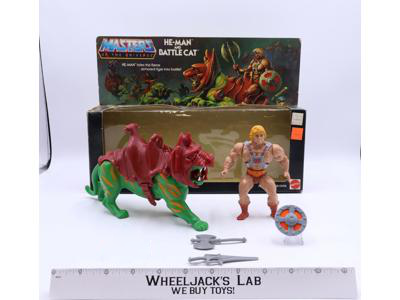
Another thing that might be easy to forget but is very beneficial is taking photos of your entire collection. This includes individual photos of each item but could also include photos of groups of toys such as a toy line or franchise together or the entire collection.
Taking photos of your toys helps you to see the condition they are in, specifically before putting them in storage at the moment you make your inventory catalog. This way, the photos will match the condition and other details listed on the catalog from the research.
Also, taking photos of the different angles and all pieces included with the toys helps to show exactly what you have in your collection. Making sure the photos are taken in good lighting with a solid color background will help to see the condition clearly if you need to reference it or see how your toys have changed in condition over the years.
Only Keep Necessary Documents
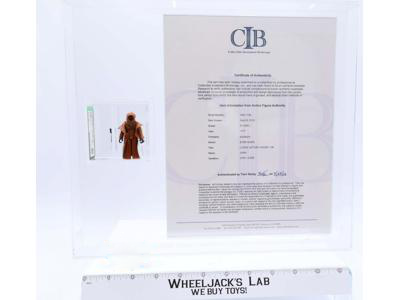
This next step is important in keeping track of everything well and not getting lost in a stack of unnecessary papers. You won't want too many documents to the point where you can’t keep track of them all and it becomes more stressful to have your collection organized than stress-relieving.
You want to keep things simple so you can know where everything is and be able to get there quickly without thinking about it too much or searching through files just to find the right one. Necessary documents include insurance policies, graded and autographed documentation, as well as inventory lists and any other needed history of your toy collection.
These necessary documents are essential for keeping the value of your toy collection and should be kept safe. However, any unneccesary papers just pile up and do not hold any value. With only keeping necessary documents, you will be able to better keep track of your collection and keep each document safe.
Organize Items by Category
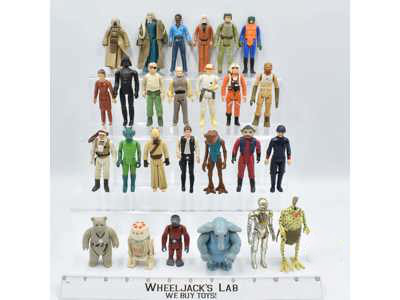
Another thing that will help greatly when cataloging a collection is to seperate it all into groups. Organizing your toy collection by toy line or franchise is super valuable to be able to see all items that are similar and by the same company.
A lot of people will choose to organize their toy collection this way by placing Star Wars toys with other Star Wars toys and by placing He-Man toys with other He-Man toys. Others might like placing them in groups by the type of toy such as vehicles with look-alike vehicles and action figures the same. This way of organizing would be great especially for smaller collections of only one franchise or a couple of franchises.
Keeping items in their toy-type will also help with storage since action figures will be able to store well together in totes and will help make sure nothing gets crushed. At the same time, vehicles can store well with other vehicles since they are around the same shape and can be packaged similarly.
Another way to categorize toys is by decade or time period. For instance, with bigger collections, storing items in groups of 1970s releases versus 1980s releases will help to keep everything in similar categories. This is also a really cool way of displaying toys so you can see all of the different toys by era for viewing. Whichever the case, having a clear system to your organizing will help you catalog a toy collection in the best possible manner.
Make Items Accessible
Making your vintage toys accessible is also very important when it comes to cataloging and storing your toys well. If you have an inventory list of items that you will need to access while in storage, it is important to make them accessible.
This is also needed for cleaning your toys and displaying them. You will be able to easily trade out items or rotate them as well as putting more toys away in storage as your collection grows. Some people invest in vintage toys and then just leave their collection in climate controlled storage or in another safe spot away from harm. This is another great way to store especially valuable items and keeps them safe. However, if you want to look at your collection often or every few months then making them easily accessible is important.
Another tip is to use as minimal files and documents as possible while still getting all of the necessary information in one spot. Also, it will be helpful to store toys in bins, acrylic cases, or on shelves in easy access in case of cleaning, selling, or to just admire your collection.
For storage, making sure to keep items in their original packaging will be greatly beneficial. This not only makes it easier to find and ensures that all pieces to the toy are all in one place, but it also makes sure the items stay in their best possible condition since packaging is designed to give a protective and custom fit to each toy. Keeping the original packaging also adds value to the toy which is always an added bonus to all toy collectors, buyers, and sellers.
Label Bins
Another factor that will help with cataloging well is to label the bins for your figures. This helps with knowing where your items are at in your inventory to easily access them. With this, you can look at the items you need to take out of storage, look at your spreadsheet or list of inventory, and quickly go to the specific item without any hassle or risk of breaking toys through searching.
Using bins also becomes very handy when moving locations as well as keeping any pests out. Bins are also ideal for protecting small toys, specifically action figures and small pieces, from any sunlight damage or water and humidity damage.
Store in a Secure Location
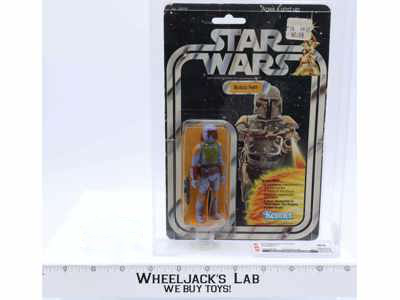
Lastly, making sure to store your items in a secure location will help you a lot with a good catalog and organized system. If your toys are in a protected and secure location then they will be more likely to not have to be checked up on as often for damage and, thus decrease in value.
Storing items in a secure location will especially help mint-in-box and other high valued items. This will ensure they keep their value and remain unharmed. Before putting your toys in storage, and even before taking pictures, proper cleaning will help you to know the condition of each item and will help keep it in that condition.
Storing in a secure location also includes keeping items off of the ground to stay away from water damage and pests or getting crushed by things placed on top of them. Also, removing batteries from electronic toys will keep them from corroding and leaking onto the toys, potentially ruining their value.
It is best to store your toys in a cool room, away from sunlight and extreme temperature or weather changes. All of these factor into the details on your catalog and how you organize your collection to maximize the value.
Final Thoughts
Following these steps to find the best way to catalog a toy collection will help with overthinking the entire process and overcomplicating it all. The cataloging process can actually be simpler than many people anticipate as long as you follow solid steps to help you along.
Keeping your collection organized will help you out tremendously in the long run and will keep you an efficient collector with items in good condition.
Do You Have Old or Used Toys?
Don’t let your collection sit in storage gathering dust—turn it into cash! At Wheeljack’s Lab, we specialize in evaluating and buying vintage and used toys, from single standouts to entire collections.
Our friendly, expert team has decades of hands-on experience in collectible toys, so you can expect honest evaluations and a smooth process from start to finish. Ready to sell? Call us at 888-946-2895 and let’s get started.
About the Owner, Chris Ingledue
Chris is the founder and owner of Wheeljack’s Lab Pop Culture and Toy Shop. His vision has always been to reconnect collectors with the toys and pop culture that shaped their childhoods—sparking memories, nostalgia, and imagination along the way.
Each day in the “Lab” feels like Christmas year-round. From scouring the internet for the next great treasure—much like flipping through the Sears Catalog of years past—to eagerly awaiting the postman’s arrival like Santa himself, Chris lives and breathes the thrill of the hunt. Helping collectors around the world experience their own version of Christmas is what makes being a vintage toy buyer an absolute joy.